%20scilla.studio.svg)

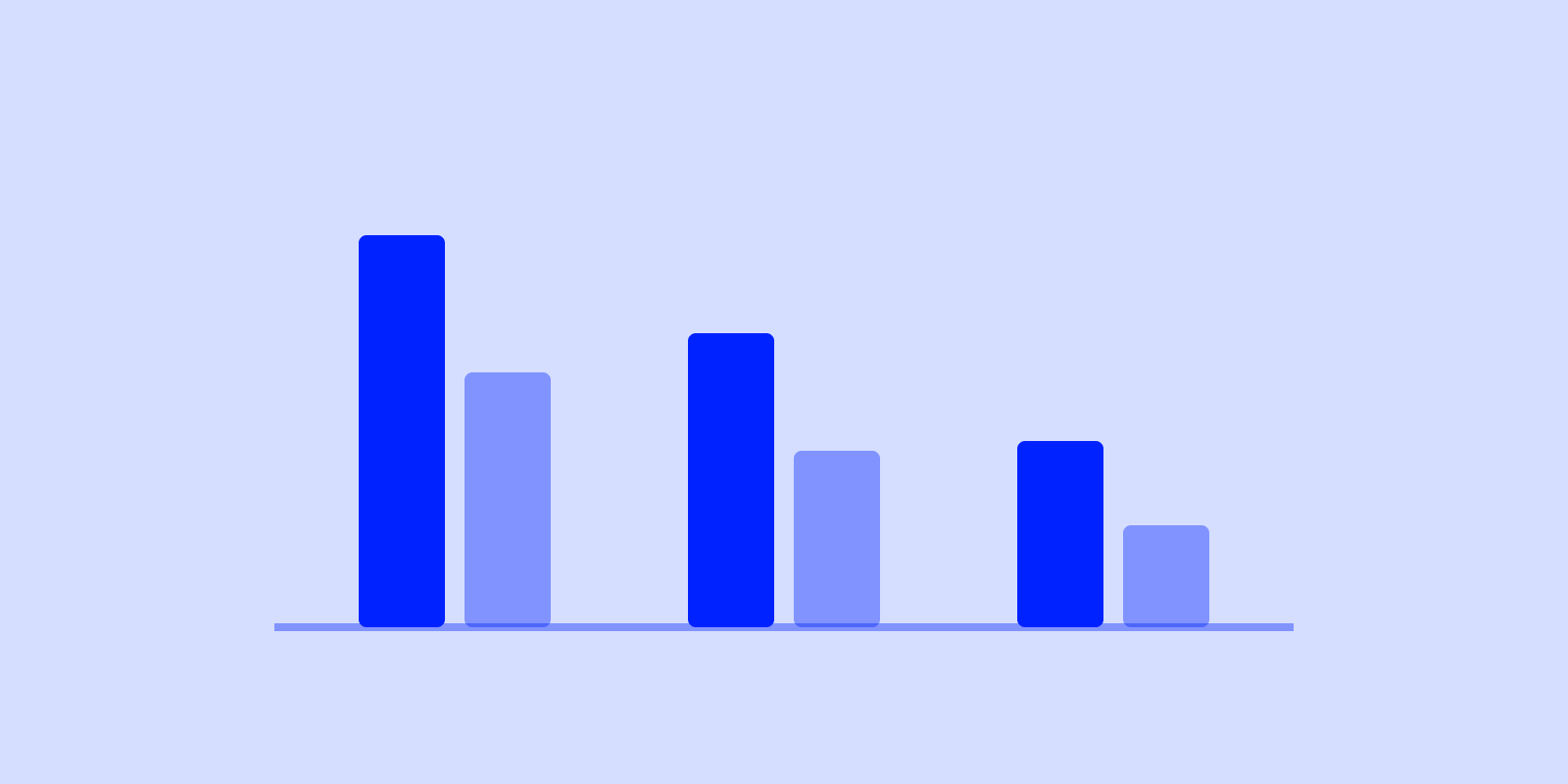
A good Day-1 retention rate is roughly 50% to 70% for a B2B SaaS tool and 20% to 30% for a consumer app. By Day-7 the healthy band drops to 40% to 60% (B2B) and 8% to 15% (consumer). Further out, at Day-30 and beyond, you stop chasing a single magic percentage and start watching whether the curve has flattened.
Those two contexts are so different that comparing them directly is the first mistake most people make. Here's how to read your own curve honestly.
Retention rate is the share of a cohort (everyone who first used or signed up on the same day) who come back and use the product again N days later. Day-1 retention is the percentage who return the day after their first session; Day-7, a week later; Day-30, a month later.
The number you should care about depends on which day you're measuring, because each day answers a different question:
One caveat before any benchmark: these are directional reference ranges, not targets. A freemium consumer game and an enterprise compliance tool can both be perfectly healthy with retention curves that look nothing alike. Use the bands to spot whether you're roughly on the map, then look at the shape.
Two tables, because mixing them lies to you. B2B and consumer products follow different growth mechanics: a consumer app pulls in huge top-of-funnel and bleeds most of it, while a B2B tool acquires fewer users who stick far harder.
| Metric | Healthy range (avg) | What it tells you | Source |
|---|---|---|---|
| Day-1 retention | 50% to 70% | Users who activate once usually return at least once more. Lower suggests onboarding or value-clarity issues. | Pendo, Amplitude |
| Day-7 retention | 40% to 60% | Early habit formation or workflow relevance. | Pendo, Userpilot |
| Day-14 retention | 35% to 55% | The drop should be flattening by now; a steep decline signals a weak core loop. | Amplitude, Mixpanel |
| Day-90 retention | 25% to 35% | Strong indicator of long-term product value. Below 20% is a red flag for B2B. | Pendo Product Benchmarks |
| Metric | Healthy range (avg) | What it tells you | Source |
|---|---|---|---|
| Day-1 retention | 20% to 30% | Below 20% = weak first impression. Above 30% = top quartile. | Adjust, Statista |
| Day-7 retention | 8% to 15% | Many apps fall below 10%. Above 15% is excellent. | AppsFlyer, Amplitude |
| Day-14 retention | 4% to 8% | A steep drop is normal. Flattening here matters more than the absolute number. | Mixpanel, Amplitude |
| Day-90 retention | 1% to 4% | Anything above 5% is exceptional for a consumer app. | AppsFlyer, Adjust |
A note on Day-30 specifically: the major benchmark datasets publish Day-1, Day-7, Day-14 and Day-90 rather than an isolated Day-30 figure, so we don't quote one either. If someone hands you a precise "good Day-30 number," ask where it came from. Day-30 is best read by tracing the curve between Day-14 and Day-90, which the ranges above bracket cleanly.
Here's the interesting part: a single retention percentage can be high and still be telling you you're about to die. What you actually want to see is the shape of the curve over time, and specifically, whether it plateaus.
There are two shapes:
To make this concrete, here's an illustrative B2B SaaS retention curve, shaped to land on the benchmarked bands above, starting at 100% on Day 0 and settling into the Day-90 band:
B2B SaaS curve shape (illustrative, lower to upper band): Day 0: 100% → 60% to 80% → 50% to 70% → 45% to 65% → 42% to 62% → 40% to 60% → … → settling around 25% to 35% by Day 90.
And the consumer curve, which is a different animal entirely, with a far steeper initial cliff, then a low but real floor:
Consumer curve shape (illustrative, lower to upper band): Day 0: 100% → 25% to 40% → 15% to 28% → 10% to 22% → 8% to 18% → … → settling around 1% to 4% by Day 90.
(The intermediate points are illustrative, drawn to show the shape, not exact published daily figures. The Day-1, Day-7, Day-14 and Day-90 endpoints are the sourced bands from the tables above.)
Look at what's happening in both. The absolute numbers are wildly different: a "good" consumer Day-90 (1% to 4%) would be a catastrophe for B2B. But the shape is the same story: a fast early drop that decelerates and finds a floor. So here's what I actually think: stop asking "is my Day-7 number good?" and start asking "has my curve stopped falling, and where did it level off?" A consumer app that flattens at 4% has product-market fit. A B2B tool that's still sliding at Day-60 with no floor does not, even at a Day-7 number that looks healthy on a slide.
(And yes, that means a flattering Day-1 number can hide a curve that never plateaus. Day-1 measures your onboarding; the floor measures your product.)
A quick reframe on why the two tables are so far apart, because it changes what you should do about a "bad" number.
Consumer products acquire broad and shallow. Big paid and viral top-of-funnel, much of it low-intent. Most of that traffic was never going to stick, so a 20% to 30% Day-1 isn't a failure; it's the cost of casting wide. The whole game is finding the small, loyal floor and the loops that keep them.
B2B tools acquire narrow and deep. Fewer users, higher intent, often a real job to be done waiting on the other side. So the bands sit much higher, and a soft Day-1 (well under 50%) usually points at onboarding friction or unclear value rather than "wrong audience." Fix the first session before you touch acquisition.
This is also why retention quality should be assessed before CAC efficiency. A great LTV:CAC ratio or a fast CAC payback period built on a leaking retention curve is a mirage: you're just paying to refill a bucket with a hole in it. Retention is the foundation those unit-economics metrics stand on. For the wider context on each side, see the B2B SaaS growth benchmarks and consumer app benchmarks for 2026.
Match the lever to the day that's weak. That's the whole trick.
Be honest about which of these you're facing. A decaying curve is a product-value question, and the temptation to paper over it with re-engagement emails is exactly how teams waste a year.
Want to know whether your retention curve plateaus or decays, and how your Day-1, Day-7 and Day-90 numbers sit against these B2B and consumer bands? The free benchmark tool plots your retention curve against the reference bands above (and charts your K-factor and unit economics in the same view) in a couple of minutes. Remember: it's there to give you context, not a target to game.
→ Check your retention against the benchmarks
What is a good Day-1 retention rate? Around 50% to 70% for a B2B SaaS tool and 20% to 30% for a consumer app. For consumer apps, below 20% signals a weak first impression and above 30% is top-quartile. Low Day-1 usually points at onboarding or value-clarity, not product quality.
What is a good Day-7 retention rate? Roughly 40% to 60% for B2B SaaS and 8% to 15% for consumer apps. Many consumer apps fall below 10% at Day-7; above 15% is excellent. Day-7 is your earliest read on whether a habit or workflow is forming.
What's a good Day-30 retention rate? Most benchmark datasets report Day-14 and Day-90 rather than an isolated Day-30, so read Day-30 by tracing the curve between them: B2B settles around 25% to 35% by Day-90, consumer around 1% to 4%. At Day-30 the question is less "what's the number" and more "has the curve flattened."
Why are B2B and consumer retention benchmarks so different? Because they acquire differently. Consumer products pull broad, low-intent top-of-funnel and keep a small loyal floor; B2B tools acquire fewer, higher-intent users tied to a real job, so they retain far harder. Comparing the two directly will mislead you.
Is a high retention number always good? Not on its own. A high Day-1 with a curve that never plateaus is a slow death: the cohort still trends to zero. A lower number that flattens into a stable floor is healthier. Look for the plateau, not just the peak.


